Slugs in CDMX for FAMLi

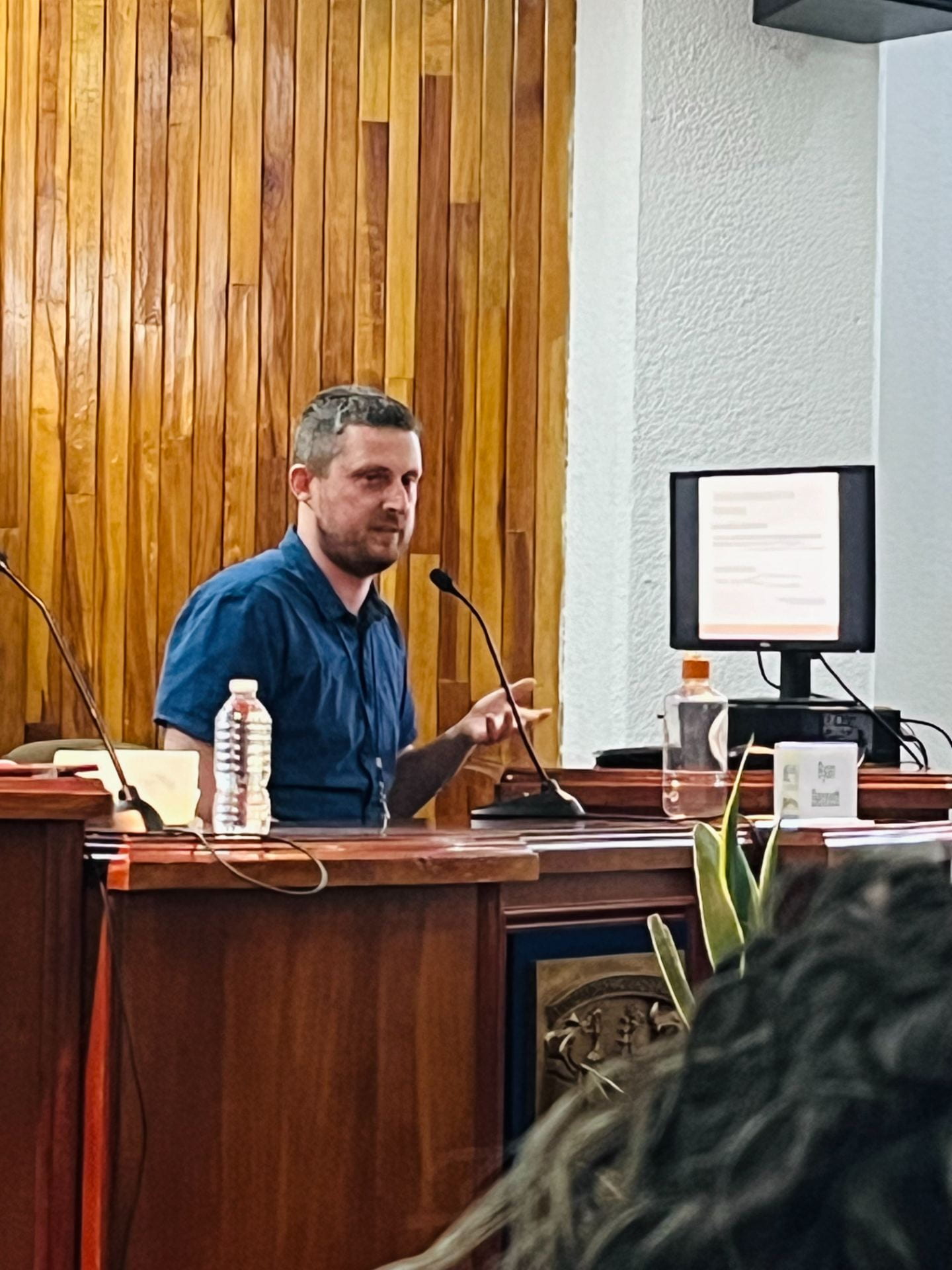
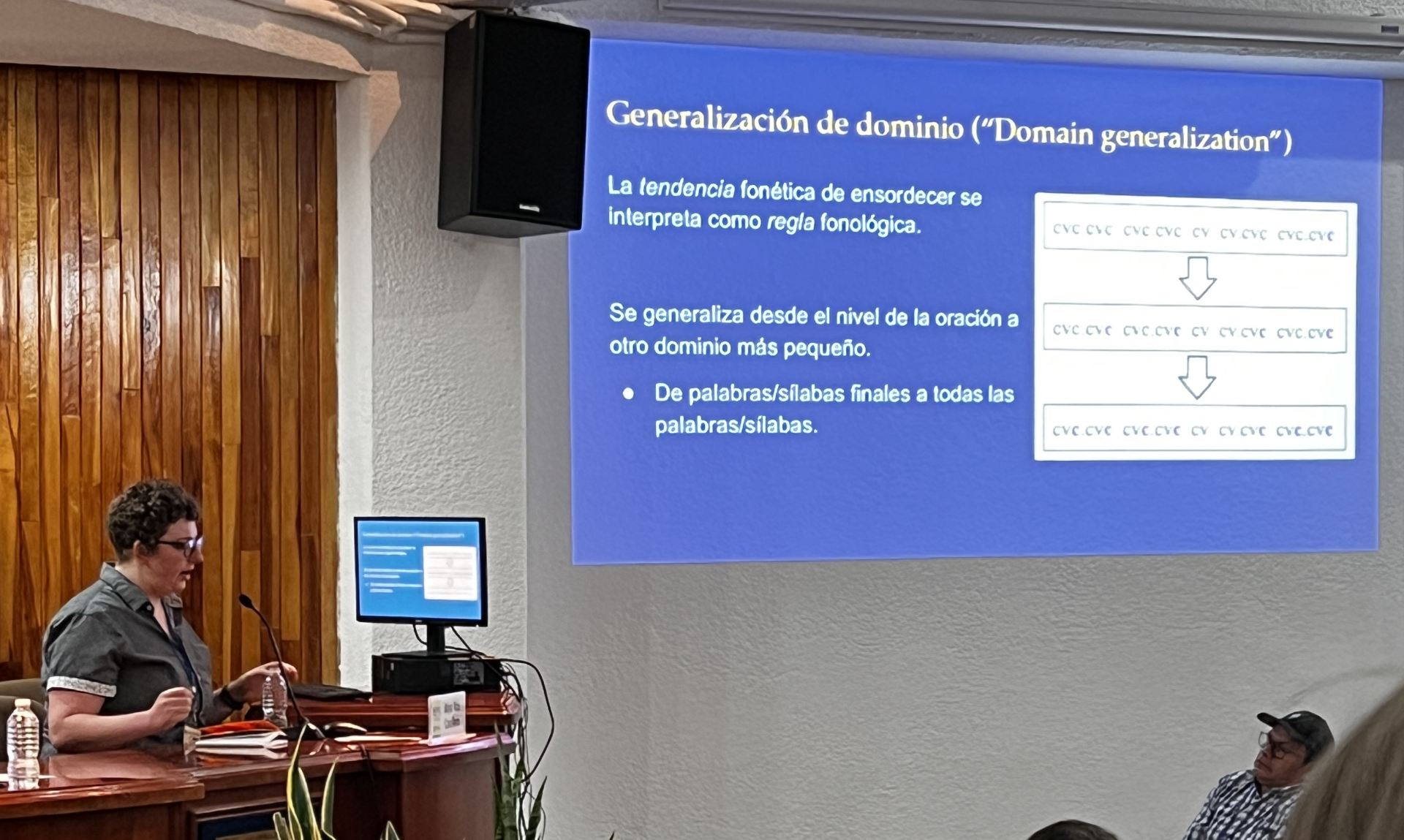
UCSC linguists Ryan Bennett and Maya Wax Cavallaro presented at Form and Analysis in Mayan Linguistics (FAMLi) VII in Mexico City Feb 22-23. Maya presented ongoing work on the development of final devoicing processes (“Domain generalization in right-edge phonological phenomena in Mayan“), and Ryan presented an invited conference plenary on the phonology of laryngeal features and segments (Spanish title: Segmentos y rasgos laríngeos en la familia maya: Evidencia que la fonología es abstracta, y distinta de la fonética; English translation: Laryngeal segments and features in the Mayan family: Evidence that phonology is abstract, and different from phonetics).

Also present were Robert Henderson (PhD 2012), Jaime Pérez González (Chancellor’s Postdoc 2021-2023), Sadie Lewis (BA 2023), and Professor Emerita Judith Aissen. Like Ryan, Jaime presented an invited conference plenary, dealing with preferred argument structure in Mocho’, titled “Preferred plot structure in Mocho’“.

You can find the streaming of the conference here (Feb 22, with Ryan and Maya’s presentations) and here (Feb 23, with Jaime’s presentation).
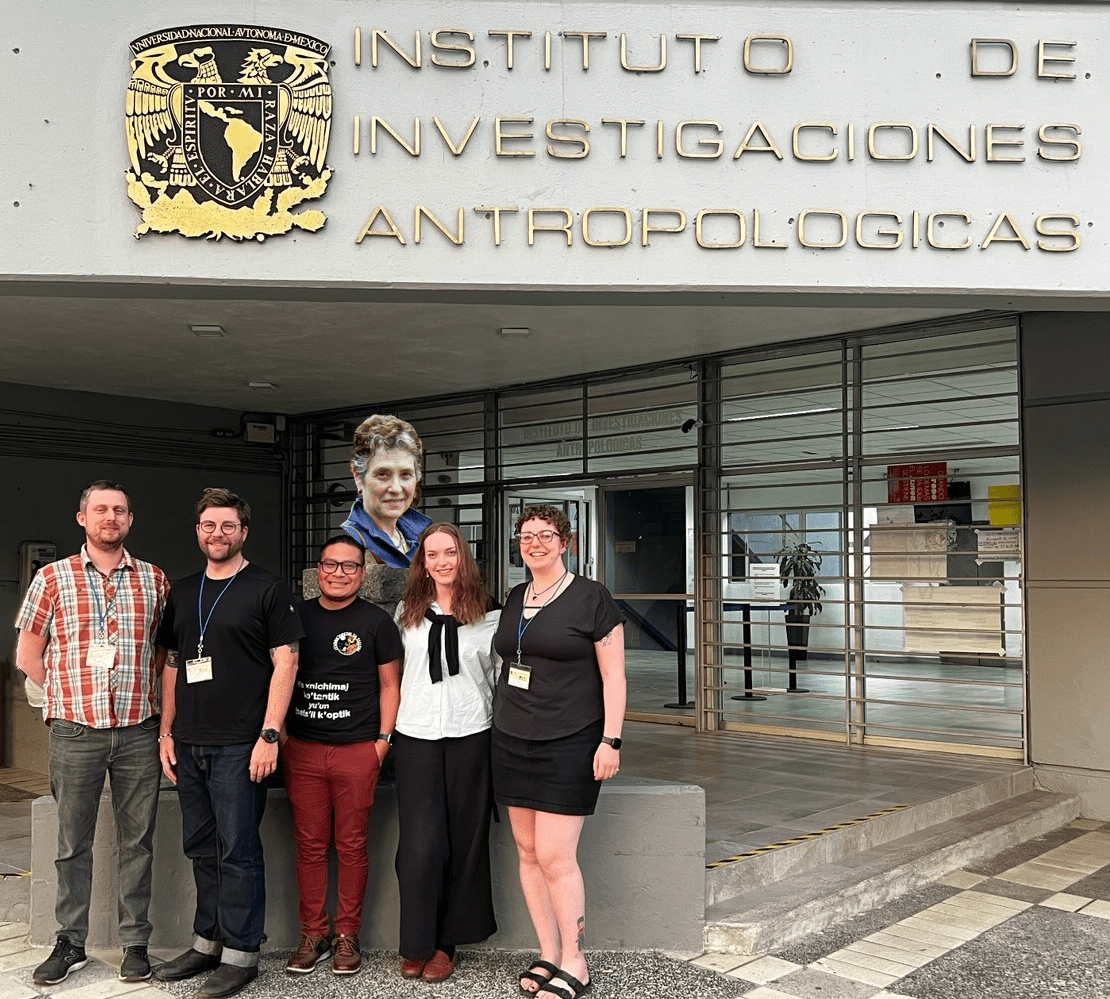
  • Slugs in attendance (left to right): Ryan, Robert, Jaime, Judith (photoshop credit to Maya), Sadie and Maya
Pancheva published in JSL

Faculty Roumyana Pancheva recently published a journal article titled “Morphosyntactic variation in numerically-quantified noun phrases in Bulgarian” in the Journal of Slavic Linguistics.

See a short abstract attached:

Bulgarian masculine nouns have a special form – a ‘count’ form – different from singular and plural, which is used in numerically-quantified nominal phrases. The count form is analyzed here as accusative singular. Several empirical arguments are offered in support of this un usual account, and potential challenges are addressed. The account places Bulgarian among an understudied group of languages, where singular vs. plural marking on nouns in numerically-quantified nominal phrases varies by noun class.

Congrats, Roumi!

Sichel at Berkeley SS-Circle

Professor Ivy Sichel was invited to give a talk at the Berkeley Syntax and Semantics Circle on Friday (Feb 2), titled “Parasitic gap licensing without movement”.

A leading empirical claim in the study of parasitic gaps (henceforth, PGs) is that they are licensed by an A-bar movement chain which stands in a particular structural relation to the PG (Engdahl 1983, and many others). Here I argue, based on the distribution of PG licensing by Hebrew RPs, that the requirement is actually weaker, and should be recast in terms of a licensing A-bar chain, which may or may not involve actual movement. I will show that a non-movement A-bar dependency culminating in a resumptive pronoun (RP) may also license a PG, as long as the structural condition on the relation between the licensing chain and the PG is met. This structural condition is identical to classical cases of PG licensing (Nissenbaum 2000) dubbed by Arregi & Murphy (2023) Parasitic Scope (following Barker 2007):

(1) Parasitic Scope for PG licensing: The PG-containing XP must take the scope of the binder of the licensing variable.

Crucially, I show that the variable may be realized as an A-bar Operator bound RP *which does not involve movement*. In the talk, I present differences and similarities in distribution between Hebrew PGs licensed by gaps and PGs licensed by non-movement RPs. The differences follow, I argue, from differences in the placement of the Operator heading the chain and determining the placement of the PG-containing XP (1). Whereas in movement chains launched from the complement of V, the immediate binder is the trace of movement left in specvP (Nissenbaum 2000), in A-bar binding chains which do not involve movement, the immediate binder is in specCP. Since the PG-containing phrase must take the scope of the licensor’s binder, this derives the core difference in PG-licensing: PGs contained within vP-level clausal adjuncts are licensed by a movement chain but not when the RP is not associated with movement (Sells 1984, and more recently Hewett 2023, based on much broader cross-linguistic coverage) – the binding Operator is too high. In other environments, where the Op binder does satisfy (1), these RPs do license PGs, showing that a movement derivation is not absolutely required.

Slugs presented at 2024 CAMP

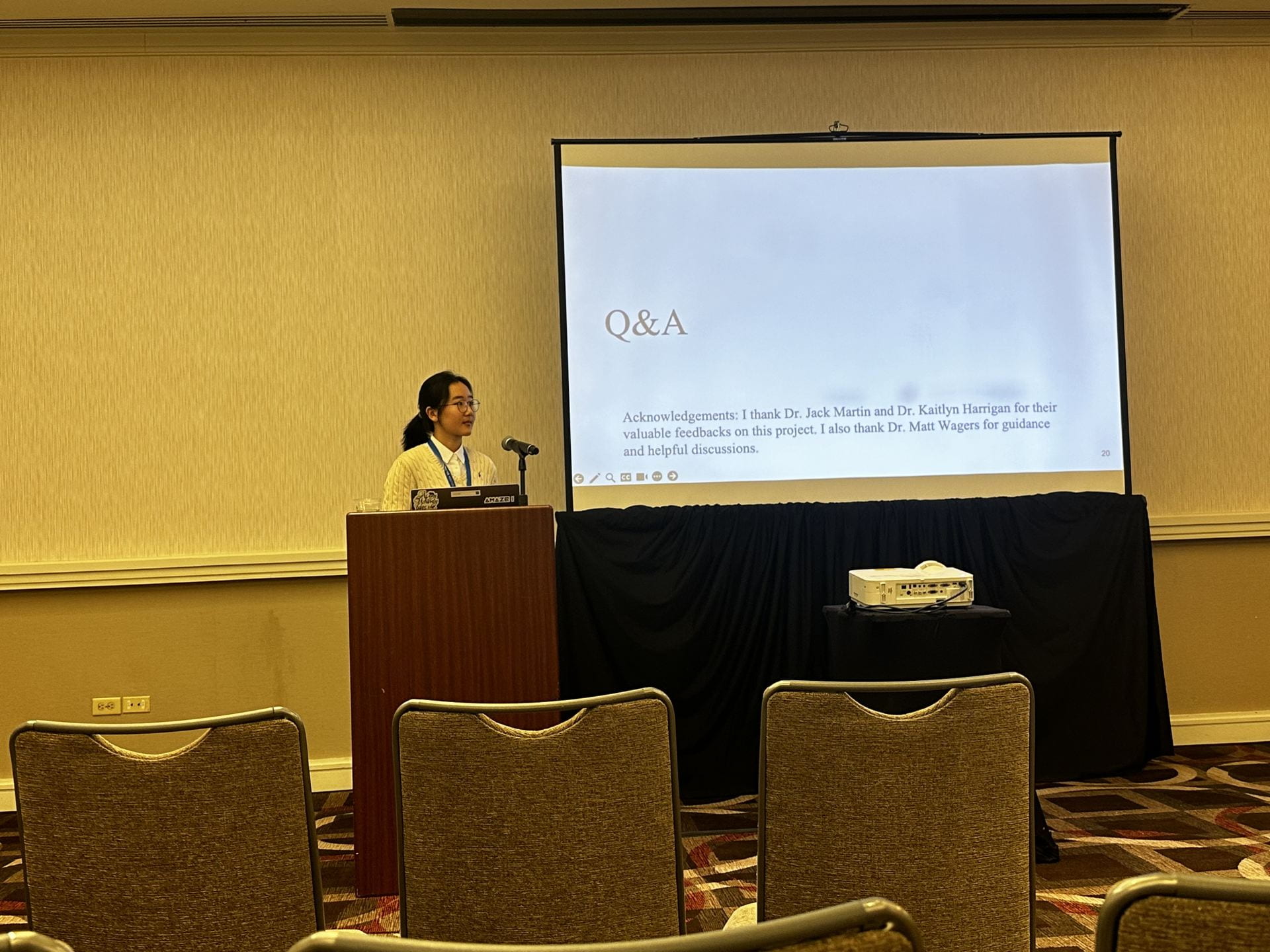
Over the weekend, Jan 13-14, UCSC psycholinguists present their works at the 6th California Meeting on Psycholinguistics (CAMP) hosted at Stanford University. Third-year Ph.D. student Matthew Kogan presented joint work with faculty Matt Wagers on “Investigating Syntactic Gating during Subject Retrieval with English Ditransitives“. First-year Ph.D. student Ruoqing Yao presented joint work with Jiayi Lu and Judith Degen (Stanford) on “Perceived interpretability predicts stability for CNPC islands but not WH islands“.


Fourth-year Ph.D. student Nikolas Webster presented a poster “Investigating prominence alignment processing advantages in Korean nominal“, and first-year Ph.D. student Emily Knick presented a poster titled “Temporal stability and the online assignment of hierarchical prosodic structure“.

Slugs at Centennial LSA Meeting

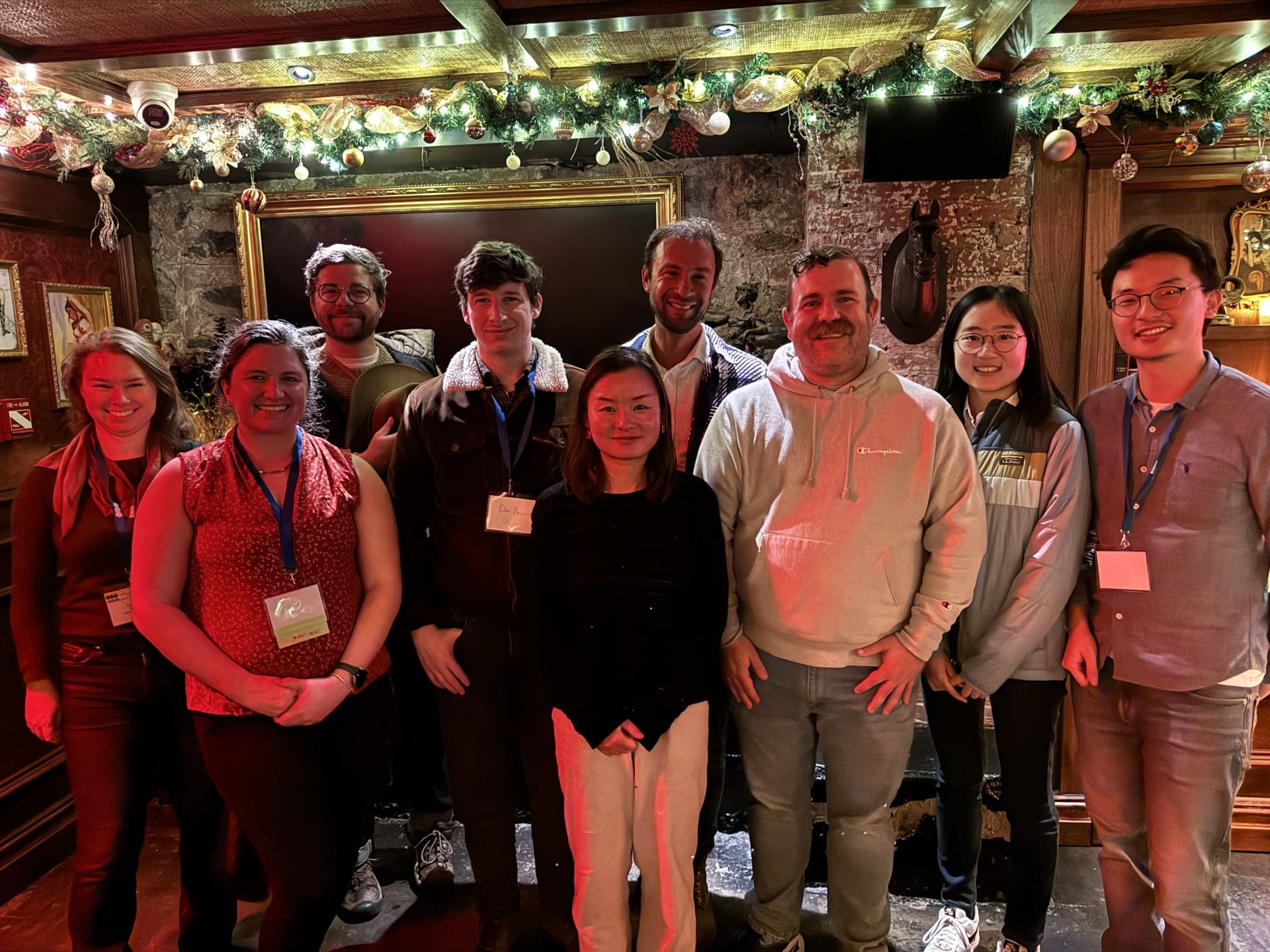
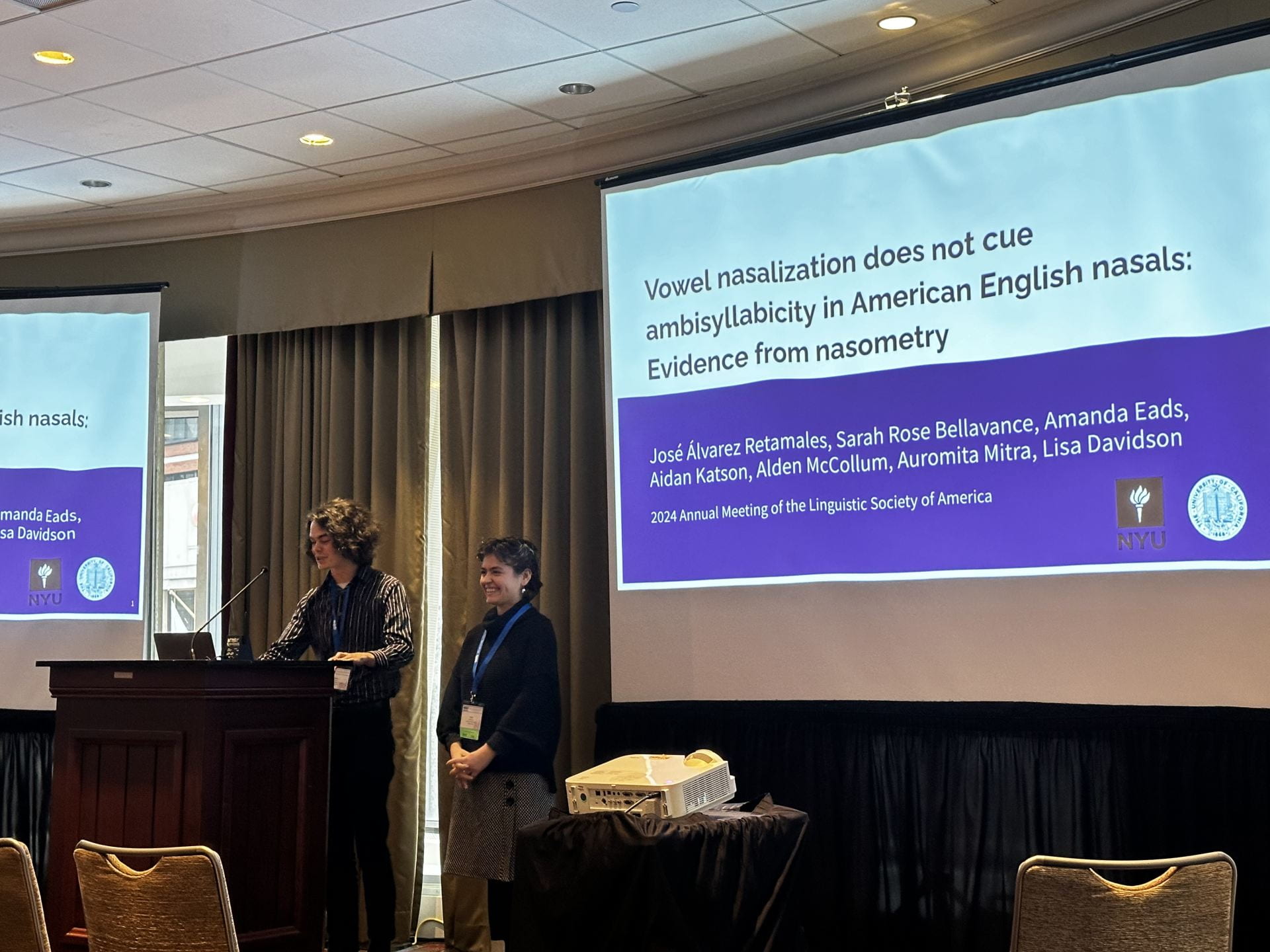
UCSC Linguistics was well-represented at the centennial Linguistics Society of America meeting that took place in the heart of New York, NY, from Jan 4-7.

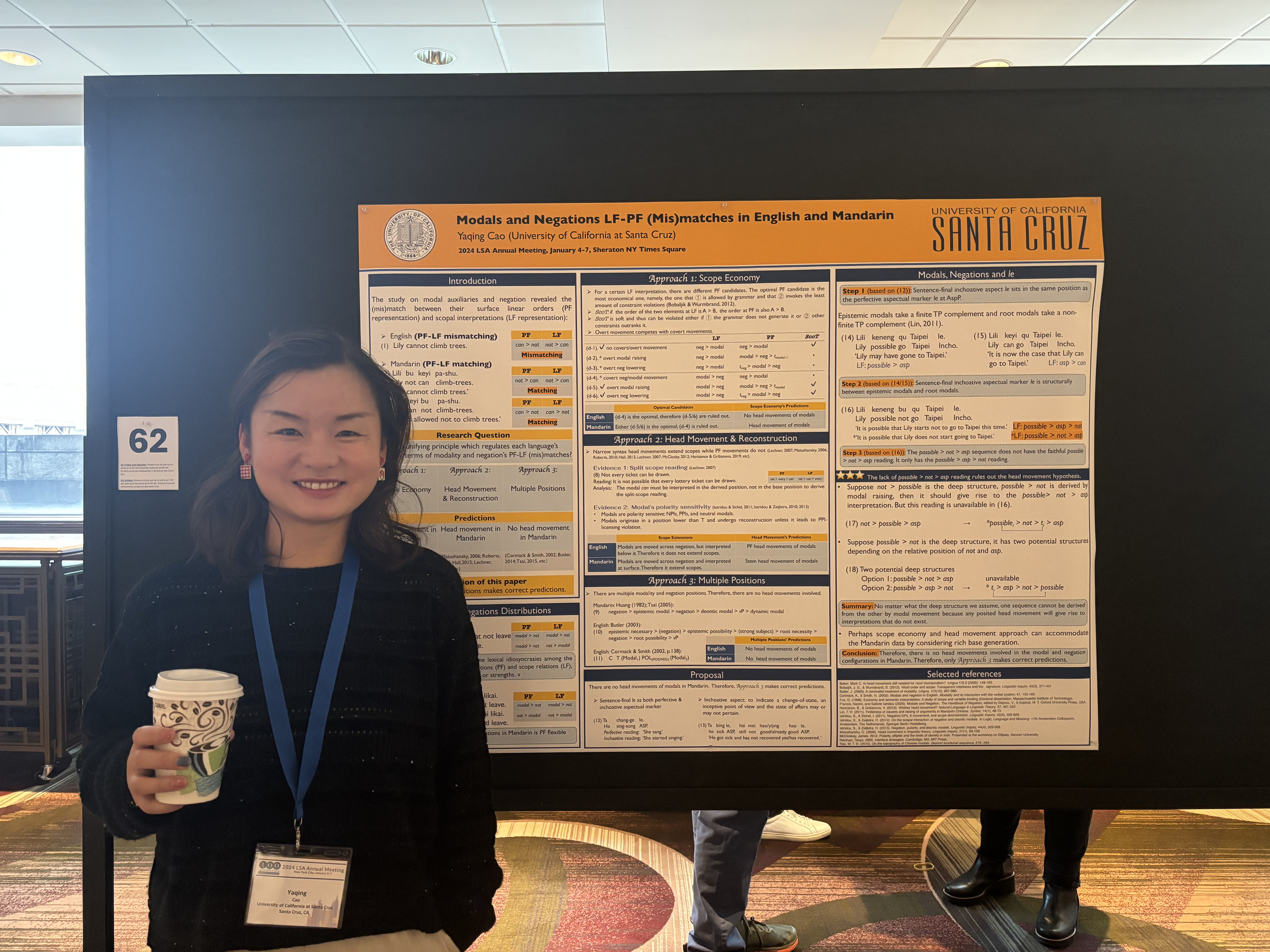
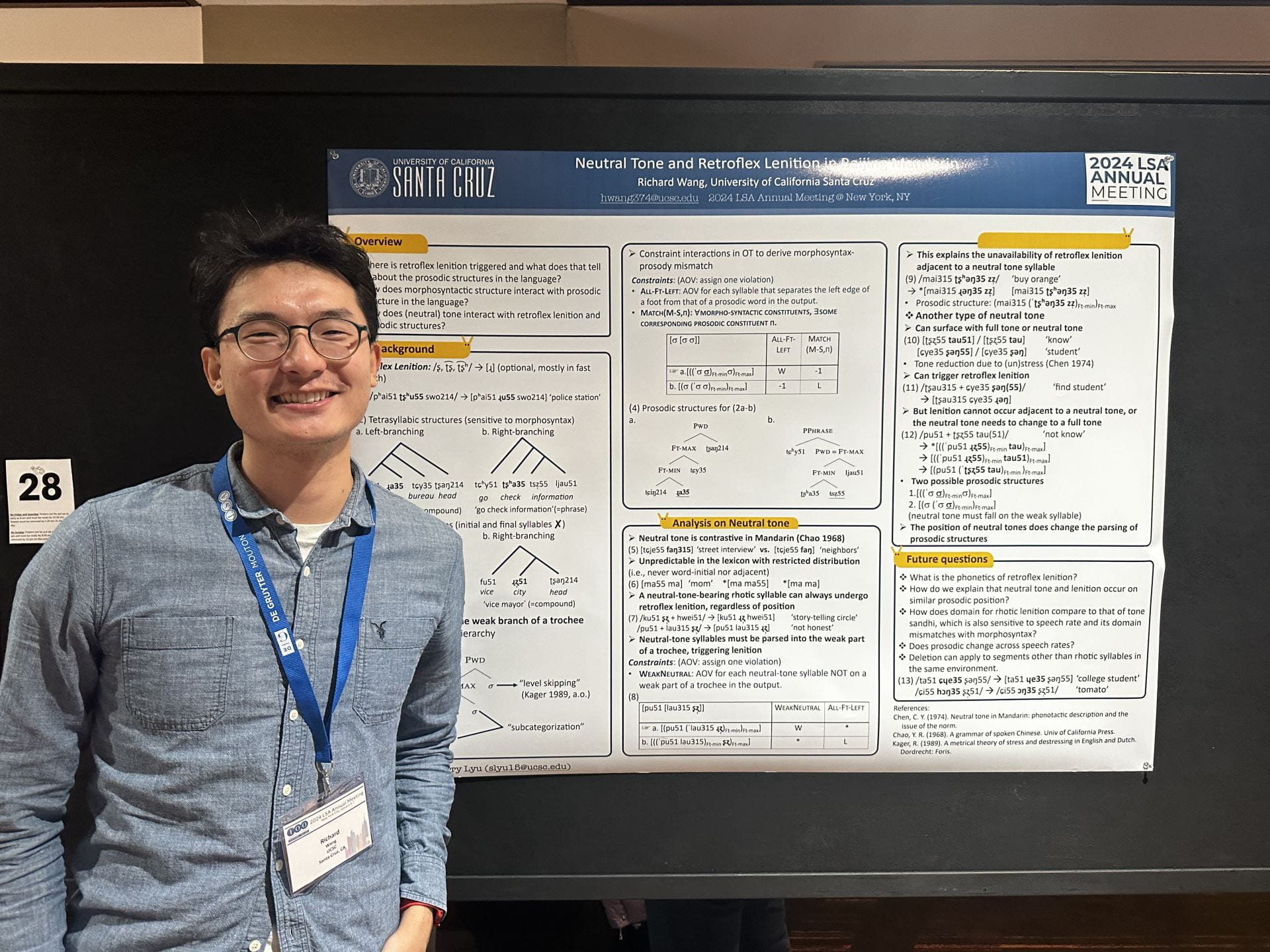
Poster-wise, fifth-year Ph.D. candidate Yaqing Cao presented a poster on “Modals and negations LF-PF (mis)matches in English and Mandarin” and second-year Ph.D. student Richard Wang presented a poster on “Distribution of neutral tone and retroflex lenition in Beijing Mandarin“.

Also in attendance were Profs. Matt Wagers and Maziar Toosarvandani, Robert Henderson (U. of Arizona, Ph.D. 2012), Caroline Andrews (U. of Zurich, B.A. 2011), Maura O’Leary (Swarthmore College, B.A. 2013).

  • UCSC Gathering (from left to right): Caroline Andrews, Maura O'Leary, Robert Henderson, Dan Brodkin, Yaqing Cao, Maziar Toosarvandani, Matt Wagers, Ruoqing Yao, Richard Wang
1 6 7 8 9 10 56